When people hear "foster care trauma," most of them think about what happened to a kid before they came into care. Yes, that matters but it's only half the picture. Being removed from home, moving from placement to placement, switching schools and losing touch with family (biological and non-related) can be hard on kids too.
When we understand the layers, we stop blaming kids for how they're coping and start asking better questions. Systems can also make choices that cause less harm.
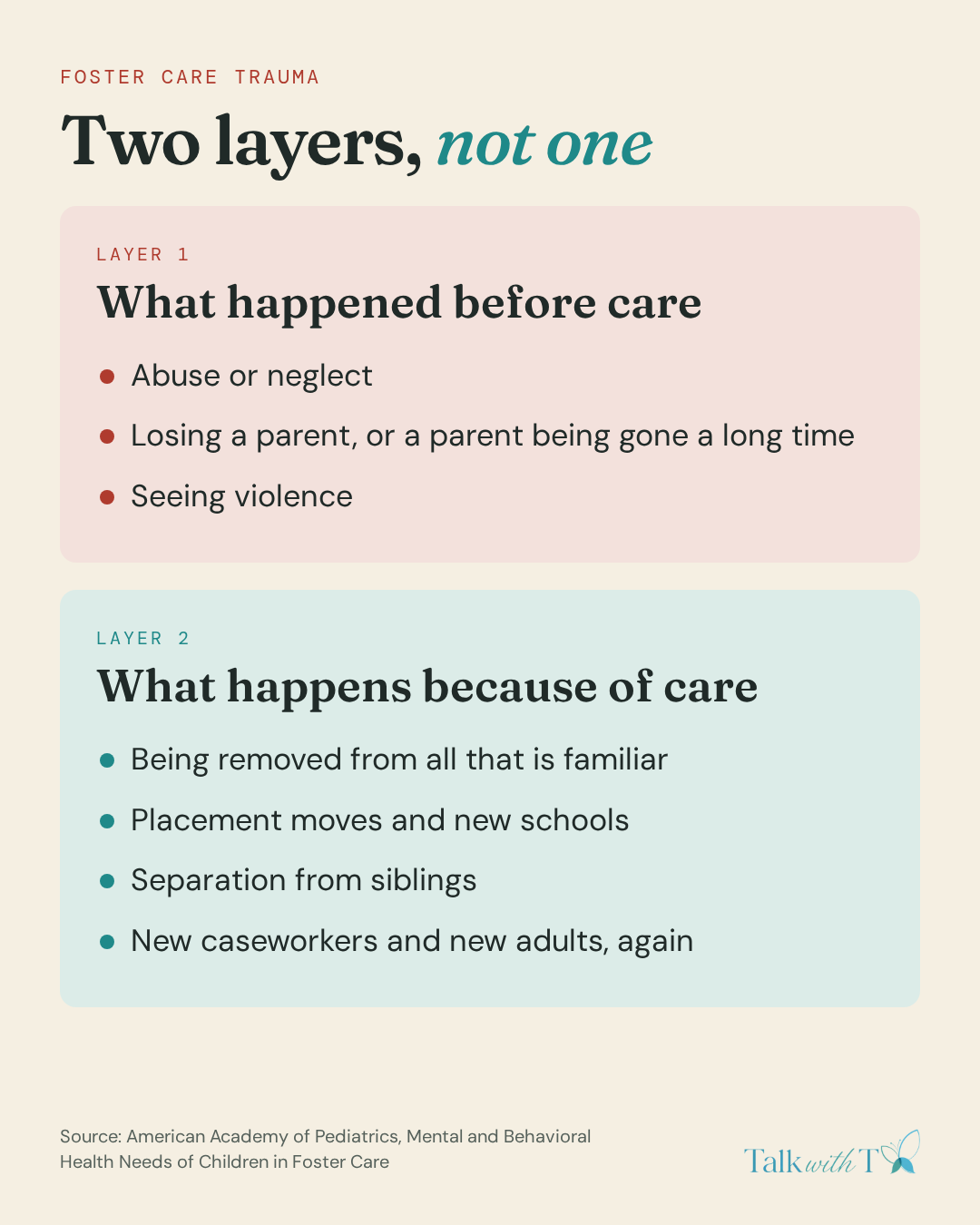
The two layers of foster care trauma
What happened before care
Kids usually come into foster care because their family was in crisis, experiencing a lack of resources, or that they were unfortunate victims of direct mistreatment, harm, or inconsideration. Childhood trauma can take many forms, including abuse and neglect, the death or ongoing absence of a parent, and exposure to violence.
What happens because of care
Here's the part people miss. Being removed from "all that is familiar" is emotionally traumatizing for anyone and the ongoing separation, losses and uncertainty of foster care adds to it.
Not every kid reacts the same way. To put it simply: what is traumatic for one child may not be seen as traumatic for another. Foster care trauma isn't a diagnosis, and it doesn't define who a kid is. It's a way to understand what they've been through and what they may still be experiencing.
Why a "move" is never just a move
For a kid in care (I personally had 14+ moves in 2 different counties), a move is rarely just a new address. Transitions that can wear down a child's sense of safety and self, include:
- Being separated from siblings
- Socio-economic differences
- Family visits that are chaotic or unpredictable
- Changes in foster home dynamics (parental figures and bio, adoptive, and/or foster siblings)
- Changes in expectations and traditions of the household
- Changes in private and/or shared spaces
- Changes in food options/restrictions
- Opportunities for personal preferences and acceptance
- Changes in school or child care
- Changes in social groups and social influence
- Changes in religious supports or inaccessibility
- Court reports and hearings
- Facing biases
- Rejections or acceptance of autonomy or partner preferences
- Inability to repair relationships
- New caseworkers, therapists, teachers or other important adults
Every one of those changes means new rules, new environments and new people to figure out. It can mean leaving friends, routines and belongings behind. A lot of kids are grieving people who are still alive, like a parent, a sibling, or other non-related family member(s) (NRFM). That kind of loss is hard to name, and adults don't always notice it.
What it can look like
Trauma usually shows up in behavior before it shows up in words. HealthyChildren.org emphasizes how reminders of past experiences can bring back a fight-or-flight reaction. It might look like a tantrum or an overreaction. Some kids can also dissociate or “freeze”, which can look like defiance or "zoning out." Understandably with a literal ever-changing life experience, kids responses may not always be consistent.
Youth who are always on guard due to these changes can have trouble concentrating, and this can be confused with hyperactivity and attention problems. A child's strong need for control in any aspect can get the child labeled as "manipulative." Reactions can vary: Some kids pull away from people, others are very friendly with everyone they meet, and for some, they often go back and forth somewhere between the two.
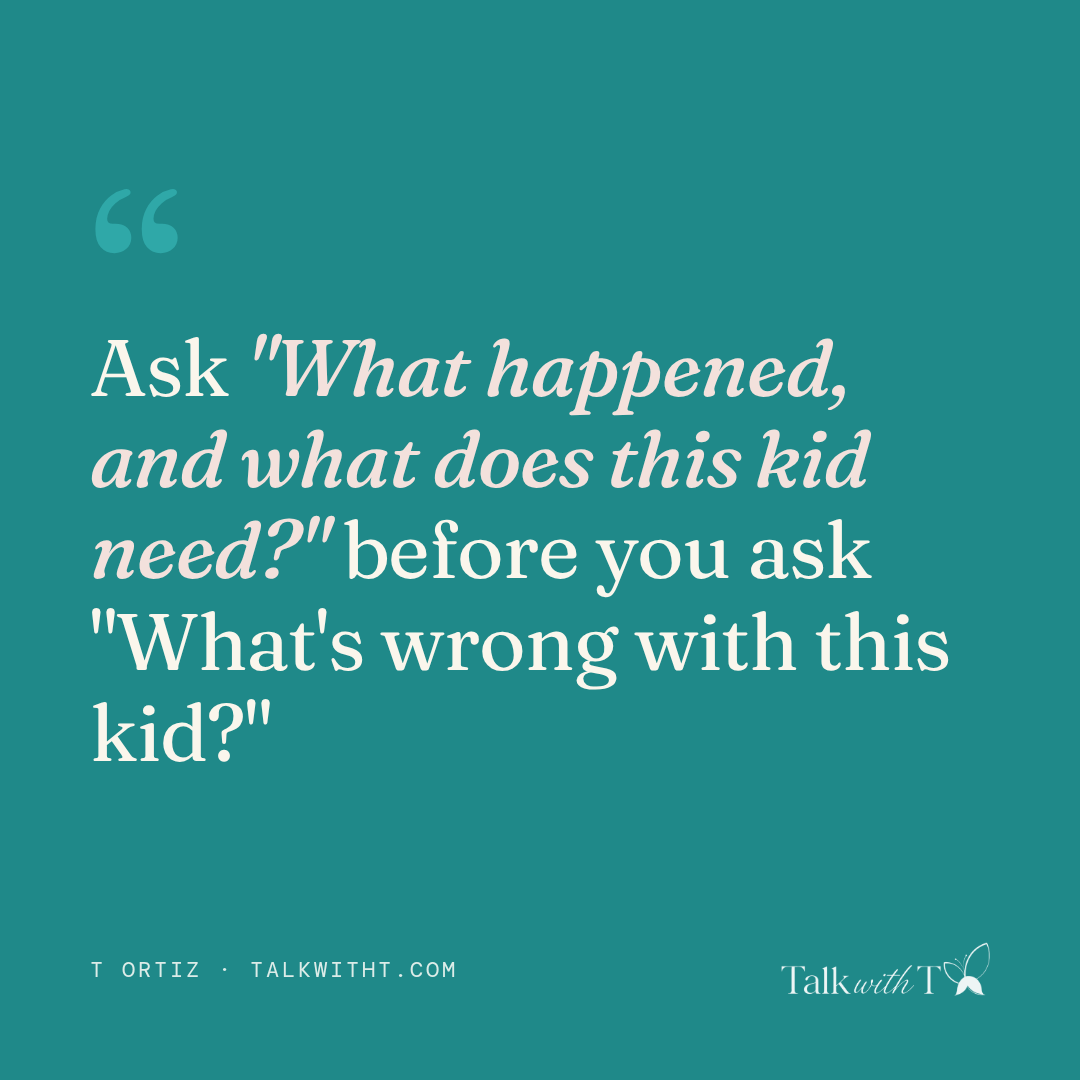
This is your reminder to ask "What happened, and what does this kid need?" before we ask "What's wrong with this kid?"
How adults can help
You don't have to be a therapist or specialist to make a difference. Steady, caring people are a big part of how kids heal.
Keep things predictable
Routines for the day, for meals and for bedtime help youth know what to expect. When a change is coming, explain it as early and as clearly as you can, in words that fit their age. Keep young people informed about upcoming decisions or proceedings. Inform them repeatedly (in any way possible), which includes written and verbal communication, emailing, flyers, text and social media (where age, technology access, and safeguards apply).
Offer real choices
Simple choices give a little control to these young people who don't often have any. Let them decide small things, and respect those decisions when you can. Let them choose things as simple as what will be for dinner, possible daily activities, or where they want to spend their clothing allowance. Let the kid lead on what they call people and how much they want to share. Do not disclose their system involvement, that should always be their own choice.
Protect their connections
Foster care is meant to help kids belong in a new home while staying connected to their family of origin, unless that's unsafe. Brothers, sisters, grandparents, friends and past caregivers can be anchors. Federal law requires child welfare agencies to make reasonable efforts to place siblings together, and to keep them in frequent contact when they're apart, unless that would hurt any of the siblings' safety or well-being.
Watch your words
Adults without enough training, who use language that isn't therapeutic or healing, as one of the things that can add to a kid's trauma. Lines like "You're lucky someone took you in" or "They're not your real family" can sting, even when nobody means harm. Be mindful of microaggressions and biases that may come up for you. Remember that it is often not a child's choice to be system-involved.
Stay calm and don't take it personally
Big feelings might land on you, but they're often about what came before. Some tips to help include lowering your voice, not yelling and finding ways to respond that don't make things worse regardless of the situation. You have to remember that they are young people that never asked to be in this situation.
Ask for support
Mental health screening when a kid comes into care and while they're in care are not uncommon. If you're worried, talk with the child first and inform them that you may be involving their caseworker and health care provider to help support them.
Y'all, caregivers need support too, don't forget to support those relationships. Please remember that doing this work includes that you should do your own as well, we must have accountability in modeling asking for support in our own lives If we expect that of the young people that we work with. Repeating the mantra of a close advocate: #Care4SelfCare4Others
For child welfare teams
A lot of the hardest moments for kids in care happen at handoffs: a new placement, a new school, a new caseworker and a paper trail of documentation that's often a poor summarization of biases, unfortunate circumstances, and unmet systemic benchmarks. Fewer moves, warm introductions, clear/consistent/coordinated explanations and protected family connections (biological and non-related) can make those moments a lot less harmful. If your team wants to go deeper, I offer training for child welfare and youth-serving teams at talkwitht.com/book.
In Summary
Foster care trauma isn't only about the past. It's also about how a kid experiences separation, changes and loss while they're in care. We can't undo what happened. We can make the next change gentler, keep their people close and meet hard behavior with curiosity instead of blame.
Want a few gentler phrases ready to go? I made a free pocket card called What to Say Instead, with simple swaps for the things adults say without thinking.
Frequently asked questions about foster care trauma
What is foster care trauma?
It's a way to describe the hurt kids can carry from what happened before care and from the experience of care itself, like removal, placement moves and losing contact with family. It isn't a formal diagnosis.
Is every child in foster care traumatized?
No. What's traumatic for one child may not be for another. Every kid is different, and only a qualified professional can assess a child's needs.
How can foster parents help a child with trauma?
Keep routines predictable, offer simple choices, protect safe connections to family and siblings, stay calm during big feelings and ask the caseworker about mental health screening and support.
Sources
- American Academy of Pediatrics. Mental and Behavioral Health Needs of Children in Foster Care
- HealthyChildren.org (American Academy of Pediatrics). Parenting After Trauma: Understanding Your Child's Needs
- Child Welfare Information Gateway. Sibling Issues in Foster Care and Adoption