When people hear the phrase "domestic violence," their minds usually jump to physical injuries, broken glass, or police sirens. But anyone who has survived an abusive relationship knows that the physical violence is rarely where things begin. It is where things end.
Long before a hand is ever raised, an intricate pattern of psychological domination is already running.
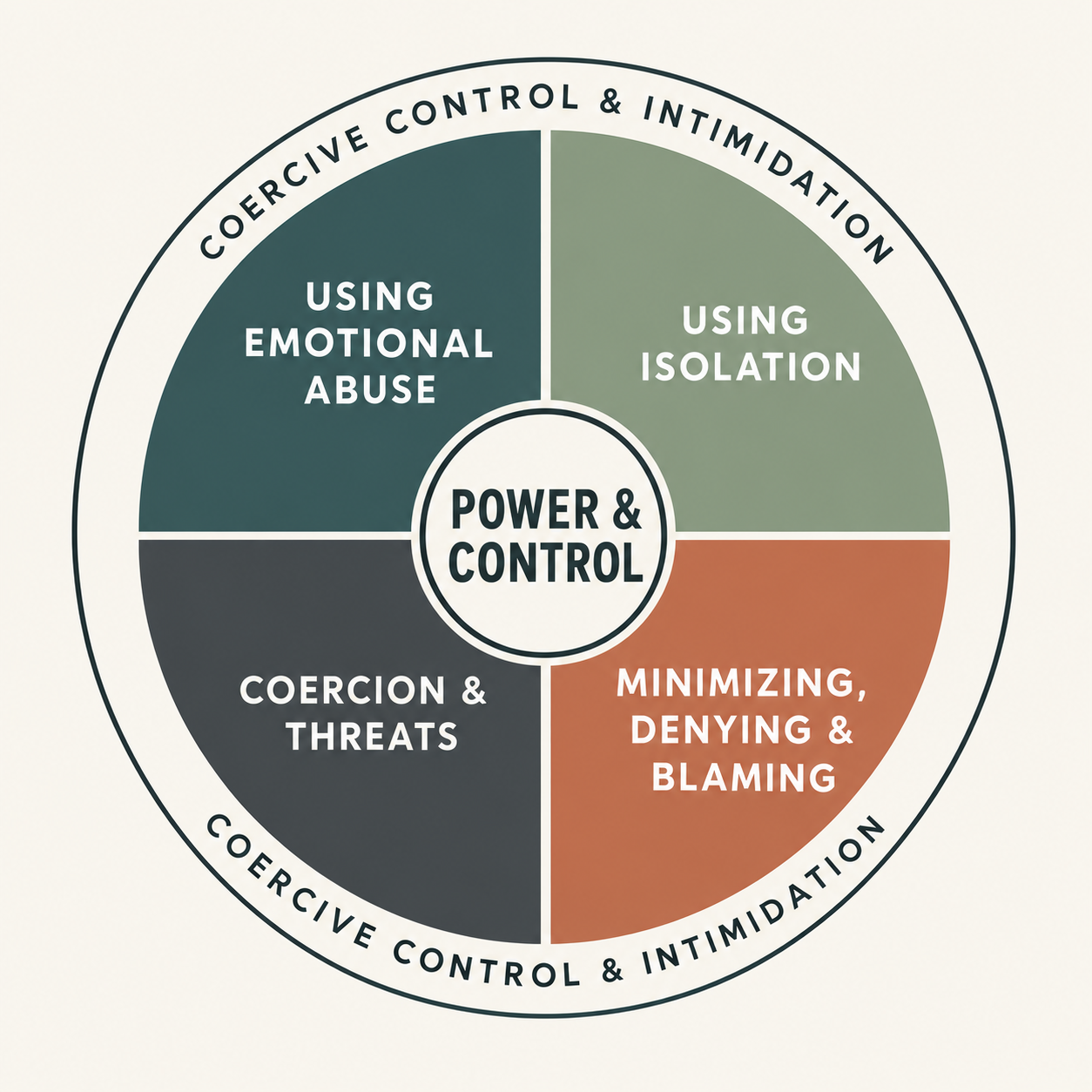
In advocacy work, our most trusted blueprint for understanding this dynamic is the Duluth Model. Having the Power and Control Wheel explained in plain language helps demystify why people stay, why leaving is so dangerous, and why abuse is never just an isolated loss of temper. The core reality at the center of the wheel is coercive control: an ongoing pattern of acts used to subordinate, intimidate, and strip away autonomy.
Here is what the relational and psychological spokes of the Power and Control Wheel look like in daily life.
1. Emotional Abuse: Dismantling Self-Worth
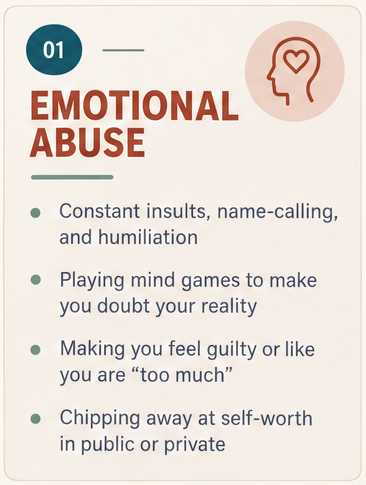
Emotional abuse is not simply having an argument or saying something unkind in anger. It is a calculated erosion of who you are. An abusive partner uses name-calling, public put-downs, and constant critique until you no longer trust your own instincts. When you are continuously made to feel worthless, defective, or unlovable, the abuser positions themselves as the only person willing to tolerate you.
Abusers might say things like: "You're too much." "No one else is gonna deal with this." "You're always so emotional." "You're lucky I put up with you." Over time, you start to believe them, and the person mistreating you starts to look like the only one who would ever stay.
2. Isolation: Cutting the Safety Lines
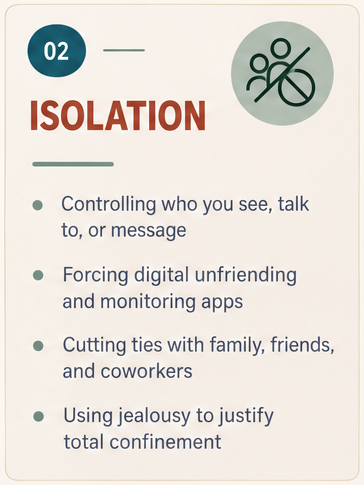
Control cannot thrive in a room full of outside perspective. Isolation often masquerades as intense romance early on: "It's you and me against the world," or "Your family doesn't truly understand our connection." Over time, it turns into monitoring text messages, demanding location sharing, and starting fights right before you see friends. When your support system is severed, the abuser's narrative becomes your only reality.
Isolation also happens through digital means. An abuser may pressure you to unfriend people on social media, or no longer allow you to play games like Words with Friends with close connections. Every small online tie to the outside world becomes something to cut.
3. Minimizing, Denying, and Blaming: The Reality Rewrite
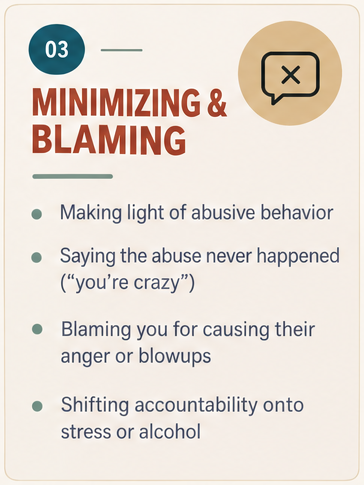
This spoke is the foundation of gaslighting. When confronted with harmful behavior, an abuser minimizes the harm ("You're making a huge deal out of nothing"), denies the event happened at all ("I never said that, your memory is completely off"), or flips the blame back onto you ("Look what you forced me to do"). The survivor ends up constantly apologizing for reacting to being mistreated.
4. Coercion and Threats: The Constant Current of Fear
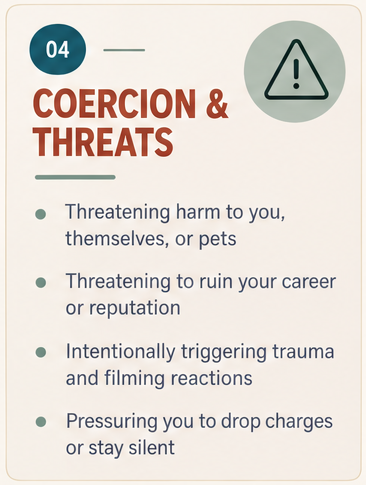
Coercion does not require someone shouting. It can be whispered: threats to leave you stranded, threats to damage your reputation, threats to harm pets, or threats of self-harm if you walk away. Living under coercion forces your nervous system into permanent survival mode.
Abusers also antagonize existing trauma or PTSD on purpose. They push and provoke until the survivor finally reacts, and then the phone comes out: "Look at you, you're the crazy one." The reaction gets recorded. The hours of provoking that came before it do not.
Where Understanding Turns Into Action
Recognizing these tactics is the first step toward breaking the isolation. If your organization, shelter, or community program works with survivors, knowing how to spot coercive control changes how you support them.
Evaluate Your Readiness: Is your team prepared to support survivors with real resources this month? Take our Is Your Org DVAM Ready? Assessment /dvam to identify your team's strengths and blind spots.